SHOULDER PAIN
Shoulder pain can make everyday tasks—reaching overhead, lifting, sleeping, or exercising—surprisingly difficult. At Active Alliance Physical Therapy, we help people in Greenville, SC understand their shoulder pain, restore movement, and return to the activities they enjoy with confidence!
Whether your pain developed gradually or started after an injury, physical therapy can help address the underlying problem and support long-term recovery.
Why Does Shoulder Pain Happen?
The shoulder is one of the most mobile joints in the body, which allows it to do some pretty incredible things! Just watch a swimmer doing the butterfly, a gymnast on the rings, or a pitcher throwing a fast ball! Unfortunately, it’s also a common source of pain and frustration. Some common injuries to the shoulder that you may have heard of are:
Rotator cuff strains or tears
Tendon irritation or impingement
Labral injuries
Shoulder stiffness or limited mobility
Poor movement patterns or muscle imbalances
Overuse injuries due to repetitive activity
Many shoulder conditions respond very well to physical therapy, and surgery is often not the first or best option.
What We Look For During Your Evaluation
Shoulder pain is rarely caused by one structure alone. During your evaluation, your physical therapist will assess:
Shoulder strength and range of motion
How your shoulder moves with your arm, neck, and upper back
Posture and movement patterns
Activities that aggravate or relieve symptoms
Your neck (often the nerves in your neck can play a big role in shoulder pain!)
This allows us to create a treatment plan that targets the real contributors to your pain.
How Physical Therapy Helps Shoulder Pain
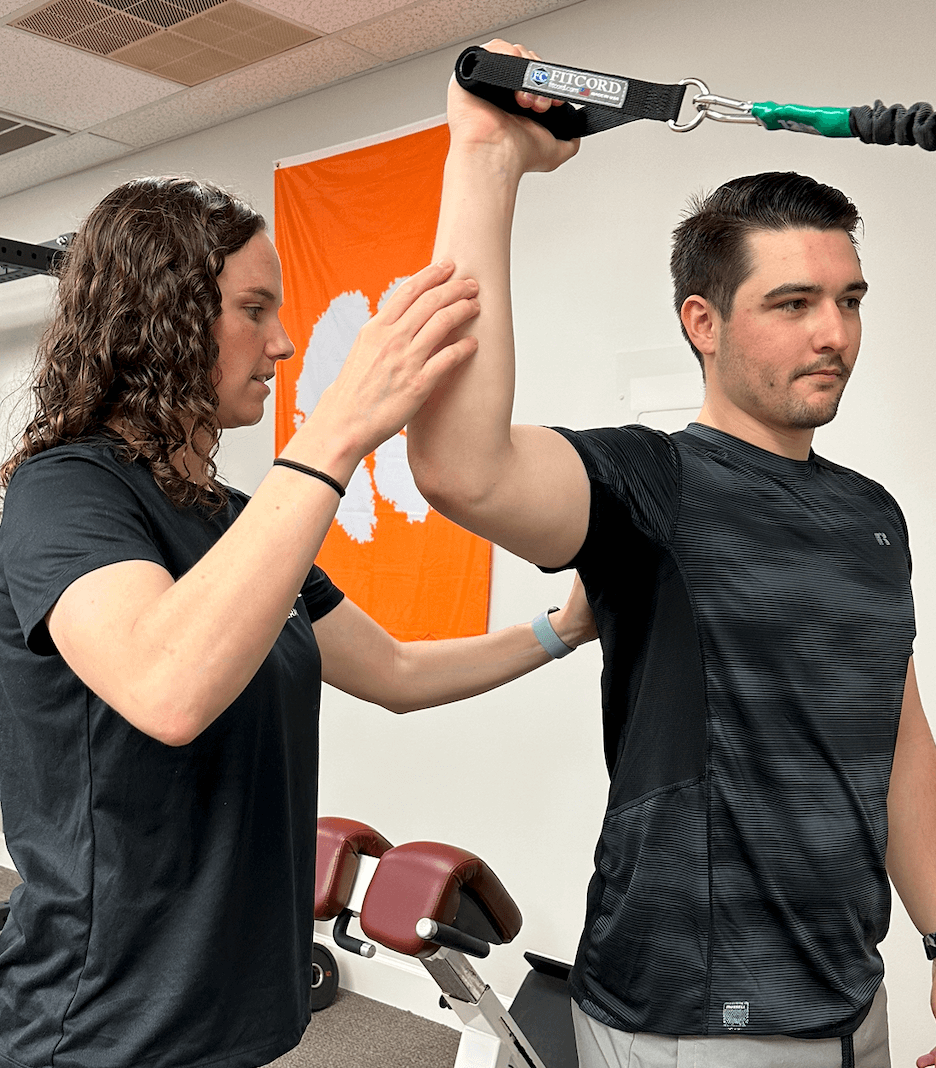
Physical therapy focuses on restoring balanced movement and strength around the shoulder and its surrounding structures. Treatment may include:
Targeted strengthening of the shoulder and upper back
Mobility and flexibility work
Manual therapy to assist in pain relief or regaining movement
Movement retraining so your move in the most optimal way
Education to reduce irritation and prevent re-injury
The goal is not just pain relief, but improved function and confidence with movement.
When Physical Therapy Is a Good Next Step
Sometimes shoulder pain is brief and you recover well on your own. However, you may benefit from physical therapy if:
Shoulder pain has lasted more than a few days and doesn’t seem to be improving
Pain is limiting work, exercise, or especially sleep
You feel weakness, stiffness, or instability
Symptoms keep returning despite rest
Remember, in South Carolina, most people can begin physical therapy without a physician referral.